


Ishigaki Island - Nagura Ampal
What is Meizo Anpal?
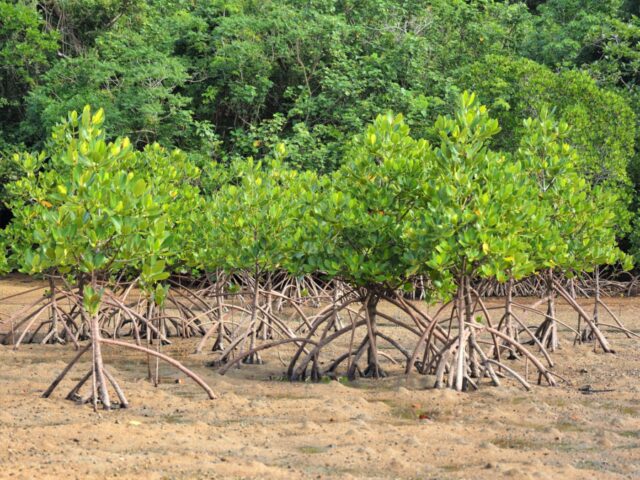
The largest bay in the western part of Ishigaki Island,Nagura Bayon the vast tidal flat that stretches out at the mouth of the Nagura River, which flows into,mangrove forestand other rare creatures and unusual plants peculiar to Yaeyama live and grow in the area.
The area where the Nagura River flows into Nagura Bay—comprising tidal flats, mangrove forests, and open fields—is known locally as “Nagura AmibariIt is said that it was originally called “,” and that this was later shortened to “Anparu.”
The mangrove swamps unique to the subtropical zone areChinese tomband ... andKabira BayIt is a popular tourist spot that is often guided along withMeizo BridgeThe entire view can be seen from the
Nagura Amparu is a precious natural environment home to one of Ishigaki Island’s largest mangrove forests, and due to its high value, it has been designated as a protected area both domestically and internationally.
◆Directions: About 20 minutes by car to New Ishigaki Airport / About 15 minutes to Ishigaki Port
◆Location: Parking available / Walking trails: Available
Ramsar Convention-listed wetlands(Registered November 8, 2005 / Registration No. 1550 / Area: 157 ha)
Iriomote-Ishigaki National ParkSpecial Area (Designated in 2007)
Nationally DesignatedWildlife Refuge(Also famous as a destination for wild birds)
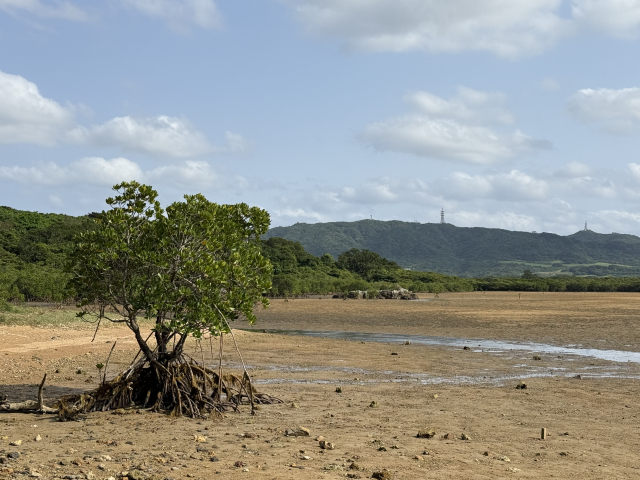
The Nagura Ampari stretches near the mouth of the Nagura River—which originates at Mount Omoto, the highest peak in Okinawa Prefecture—where it flows into Nagura Bay, and mangroves grow in dense stands along both banks of the river.
At low tide,The Unusual Roots of MangrovesYou can see the full picture.
Related columns are here↓.
How to Get to Nagura Amparu and Parking Information
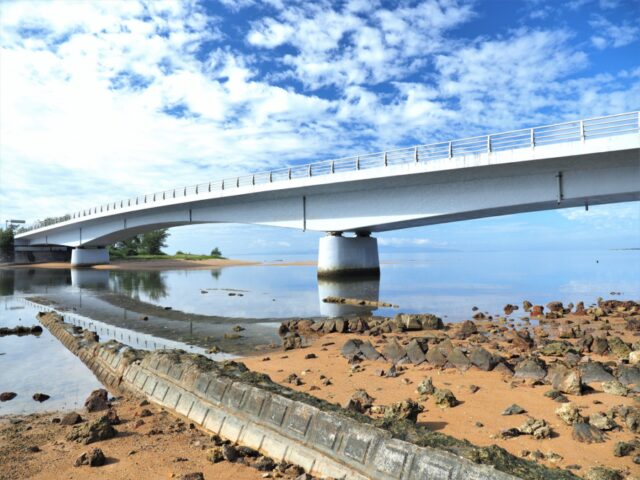
Nagura Ampal is located approximately 25 minutes by car from Shin-Ishigaki Airport and 15 minutes by car from the remote island terminal.
(2) Follow the road and turn left at the T-junction onto Route 211.
(3) Follow the road to the west and go straight for a while. Turn left at the intersection of "Meizo" and go straight.
(4) At the end of the road, merge with Route 79 and go south. Stop at the parking lot after crossing the Nagura Bridge and go down the stairs to reach Nagura Ampal.
Parking and How to Get Down to the Mudflats
Nazura Amparu has a dedicated parking area, andRight after crossing the Nazou BridgeIt's located at . Once you park your car, next to the parking lot,Going down the stairsThe standard route takes you to the riverbank and tidal flats of the Nagura River.
Since the ground on the mudflats can be muddy, we recommend wearing shoes or sandals that you don't mind getting dirty.
Best Season and Time of Day to Visit Nagura Amparu
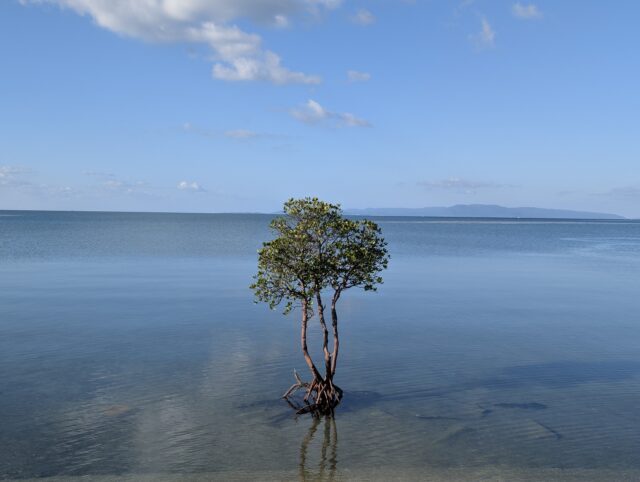
Since Nagura Ampāru is a tidal flat, the scenery varies greatly depending on the time of day and season.
If you coordinate the timing in advance, you'll enjoy it even more.
Early Morning and Evening: Wildlife becomes more active, and in the evening, you can enjoy the sunset over Nagura Bay.
Spring and Fall: It's migration season, making this the perfect time for birdwatching.
It should be noted that some of the mangroves and other living organisms are designated as National Natural Monuments.
Plants and living thingsWithout taking it home or damaging it...Let's limit ourselves to simply observing and cherish the rich natural environment.
How to enjoy Meizo Ampal
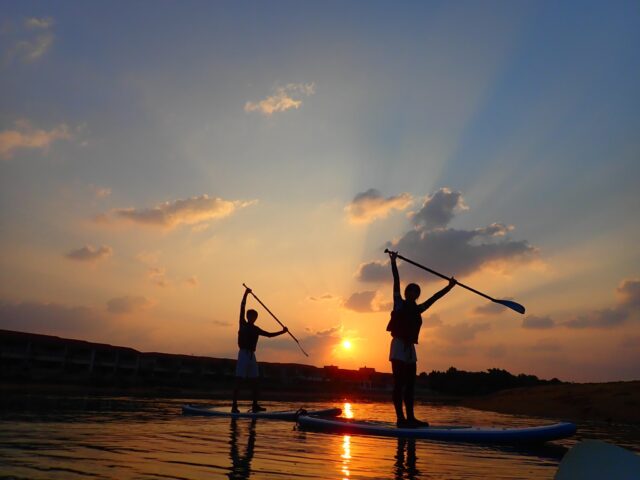
To get to Nazura Amparu, all you have to do is walk down from the parking lot to the riverbank,Experience Ishigaki Island’s nature for freeis a major attraction.
Crabs and mudskippers on the mudflatswildlife observation, during the migratory bird seasonBirdwatching, overlooking Nagura BaysunsetYou can take it easy and enjoy nature, among other things.
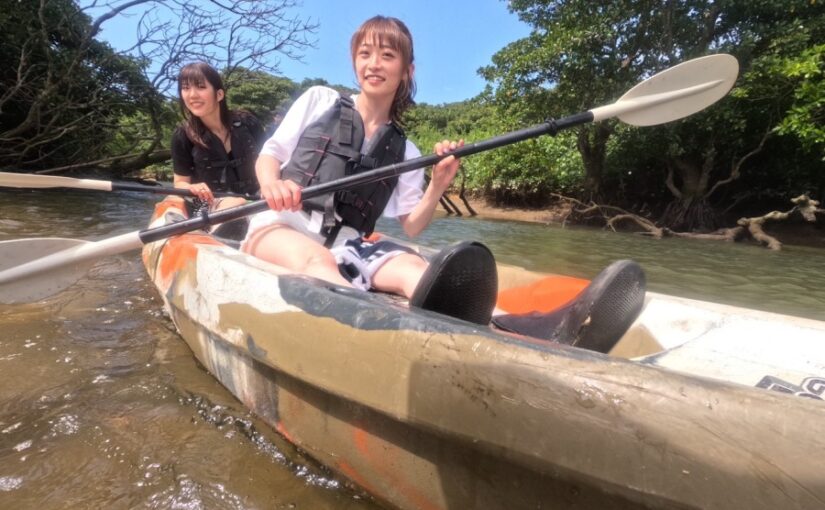
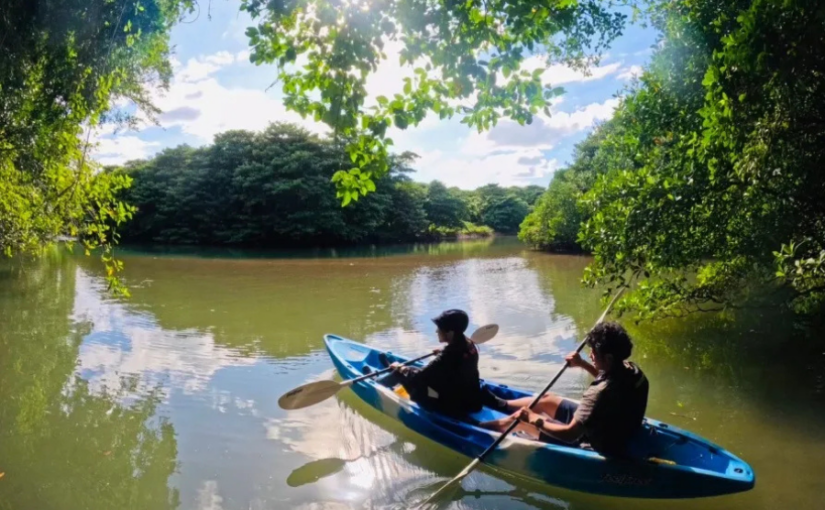
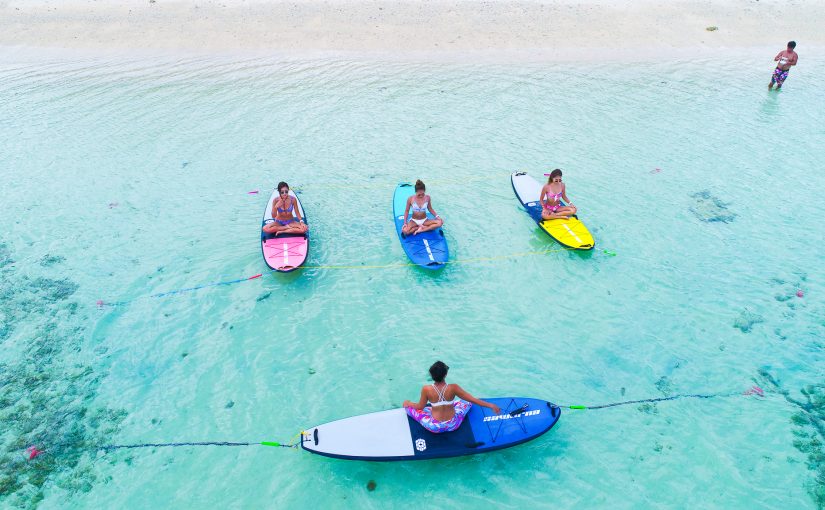
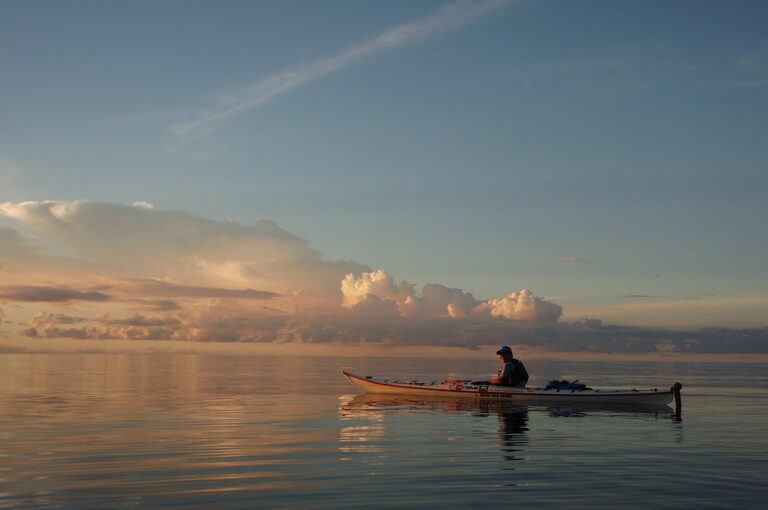
It's also a popular spot for activities, andEV TrikeThe tour will take you to popular spots on Ishigaki Island from Nagura Ampal with theSUP & KayakingWe also recommend enjoying the scenery from the water.
⬇︎ Now taking place around Mezo Ampari! Click here for recommended tours
![[Ishigaki Island] Ishigaki Island EV Trike (Guided) Tour of Instagram-Worthy Spots ◆ Nagura Bay → Fusaki Beach → Ryukyu Kannonzaki Lighthouse → Mirumiru Honpo (No. 596) Featured Image](https://ishigaki-tours.com/wp-content/uploads/2022/07/IMG_4526-scaled-e1693025611801-825x510.jpg)


Creatures Found at Nagura Ampāru
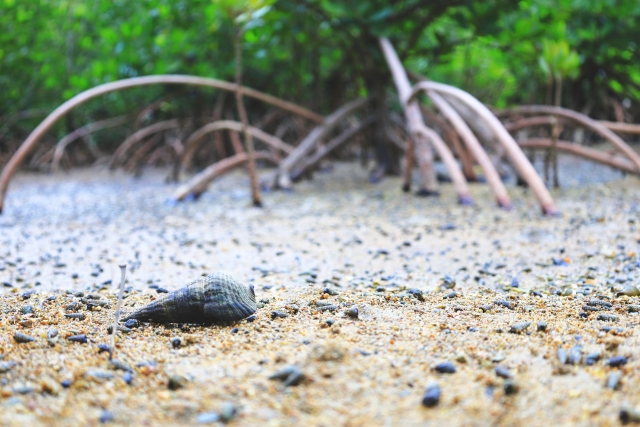
In the mangrove mudflats, “long-billed curlew (Numenius arquata)' "Okinawa bay parrotfish (Phyllostoma okinawae)' "thump-thump-meYou can observe creatures unique to Yaeyama, such as the "Yaeyama's Birds of Prey" and "Yaeyama's Birds of Prey".
long-billed curlew (Numenius arquata)
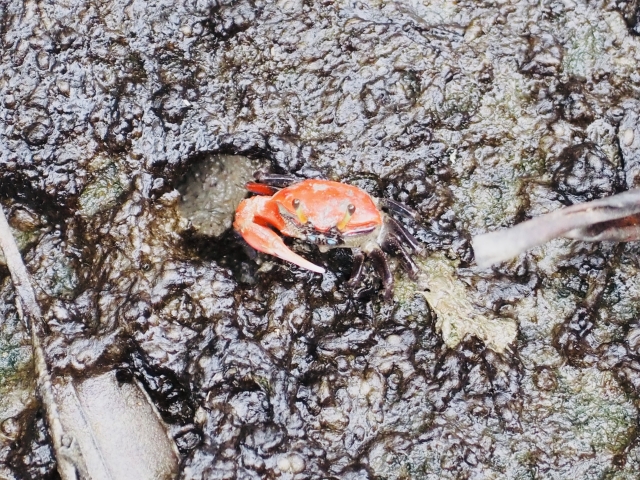
The red-breasted marmoset is a member of the lionfish family. It has one large pair of scissors, which it waves in a courtship behavior.
Because its movements appear to summon the tide, as if it were causing the tide to rise quickly, it was given the name "Shio-mane-ki."
Eviota japonica (species of pygmy goby found in Japanese waters)
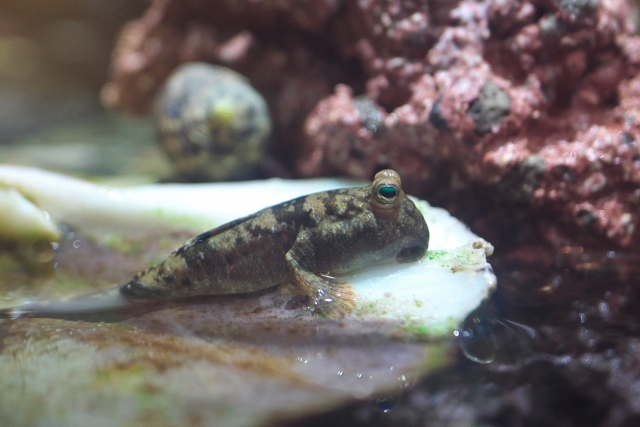
The southern flying goby is a species of goby that inhabits the brackish waters of rivers, tidal flats, and mangroves in subtropical and tropical climates.
They look so adorable as they hop around on the mudflats, and you can often see them during the summer.
From the locals."thump-thump-meIt is nicknamed "the
Central Asian box turtle (Chelonia mydas agassizii)
In the subtropical forest of Nagura Amparu, which has been designated as a National Natural Monument,Central Asian box turtle (Chelonia mydas agassizii)You may also encounter
Named for the way it closes its shell like a box when it senses danger, this rare creature is emblematic of the Yaeyama Islands.
Rhizophora mucronata (species of mangrove)
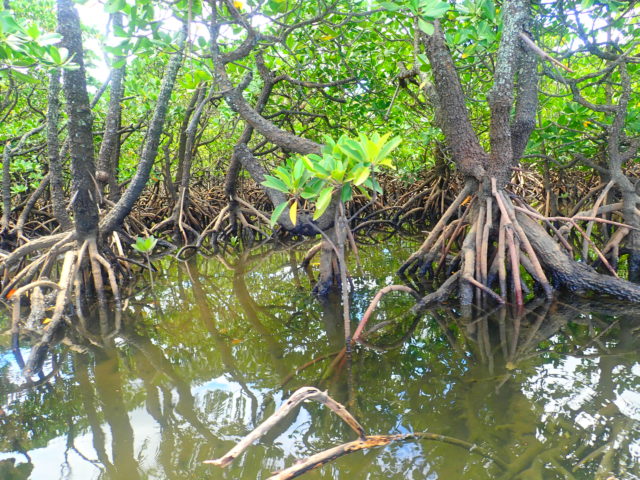
Yaeyama mangrove belongs to the Rhizophora family and is a key species in the mangrove forests of Okinawa, which are found only on the main island of Okinawa and further south.
A thick supporting root in the center of the tree supports the upper part, from which it spreads out like an octopus foot.
white mangrove
Hirgidamashi is a mangrove plant that is highly salt tolerant and distributed in estuarine areas.
As its English name, pencil root, implies, it is characterized by long, slender trees that stand upright out of the water like a pencil.
Mayapushki.
Mayapushki (Hamamelis pomelo) is a mangrove plant that grows naturally on the salty ocean side.
In Japan, it is found south of Ishigaki Island, and—like the mangrove-like tree—its bamboo-like roots protruding from the ground are striking.
It is a popular plant because of its beautiful flowers, which resemble those of the sagaribana.
Wild Birds Seen at Nagura Ampāru
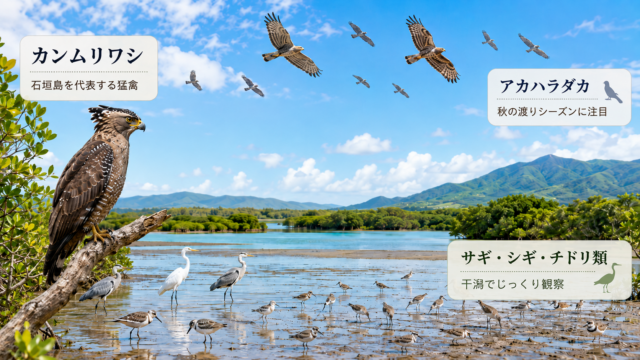
Nazura Amparu attracts many wild birds thanks to its diverse environment, which includes tidal flats, mangroves, and open grasslands.One of Ishigaki Island's Top Birdwatching SpotsIt is also known as
Many birdwatchers visit, especially during the spring and fall migration seasons.
crested serpent eagle (Spilornis cheela)
Designated as a National Special Natural Monument, this iconic bird of prey is a symbol of Ishigaki Island, and can often be seen perched on utility poles or in trees.
Red-breasted Flycatcher
Known for the massive flocks that pass over Ishigaki Island during the fall migration season, the area around Nagura Amparu is one of the best spots to observe them.
Herons, Sandpipers, and Plovers
At low tide, herons, sandpipers, and plovers gather on the mudflats in search of food. You’ll enjoy watching them even more if you have binoculars.
Recommended Sightseeing Spots Around Nagura Ampāru
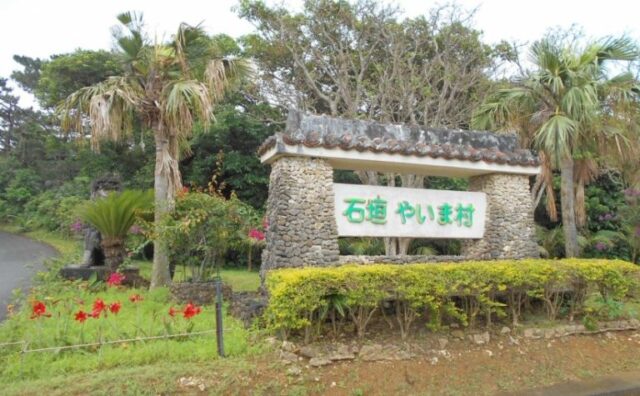
Ishigaki Yaima Village
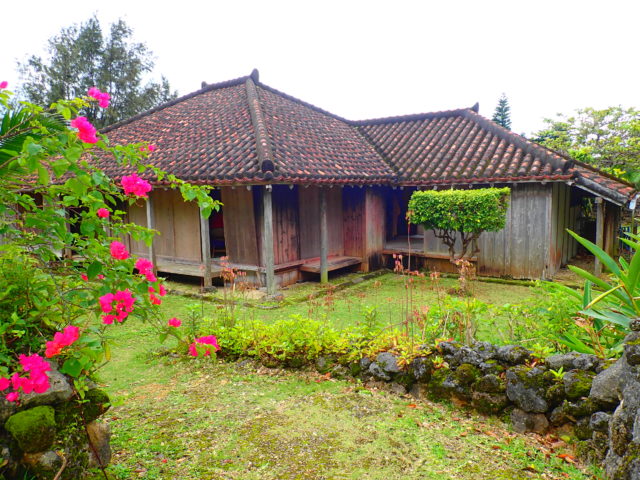
Ishigaki Yaima Village isThe old scenery of Yaeyama is reproduced.It is the southernmost theme park in Japan.
The park has a buffalo pond, a crested serpent eagle protection cage, and a cutesquirrel monkey gardenAdults and children alike can enjoy the area as it offers a variety of activities, including
Location: 967-1 Motonagura, Ishigaki City, Okinawa Prefecture
Access: 15 minutes by car from Ishigaki Port
Parking: Available
Meals (nearby): Available
Toilet: Yes
Admission: Adults 1000 yen, children 500 yen (free for children under 3 years old)
Kannonzaki
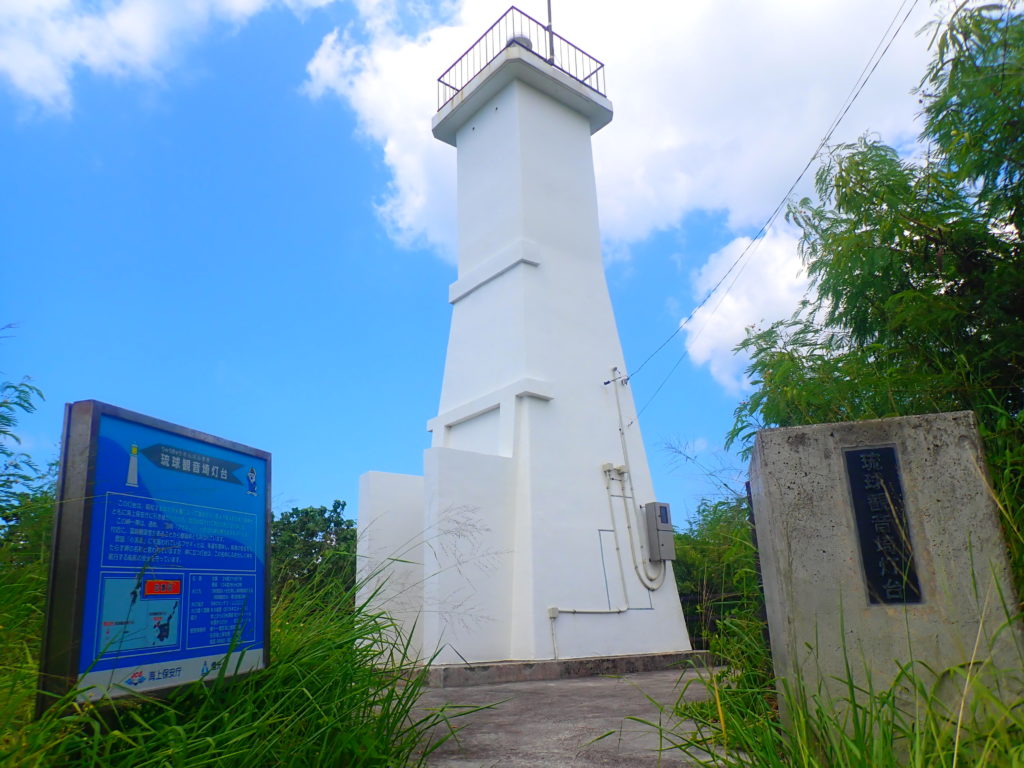
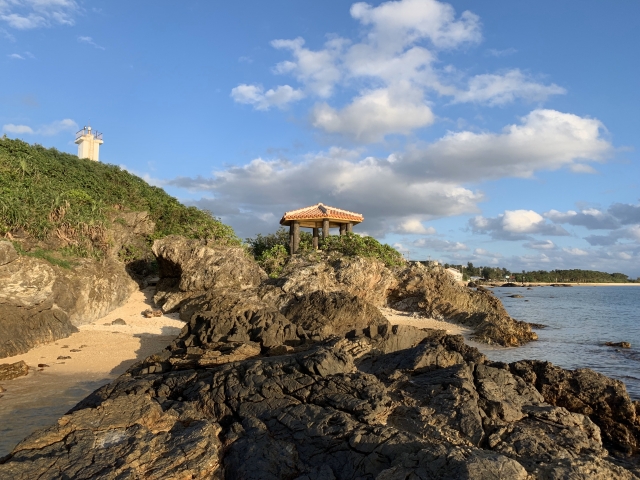
Kannonzaki is a small hill with a white lighthouse as its landmark. Below you can see a panoramic view of the crystal clear emerald green sea.
You can see the beaches of Taketomi Island and Ishigaki Island as well as Nagura Bay, and in the evening, beautifulsunsetenjoy.
Address:Shinkawa, Ishigaki City, Okinawa
Access: 20 minutes by car from Ishigaki Port
Parking: Available
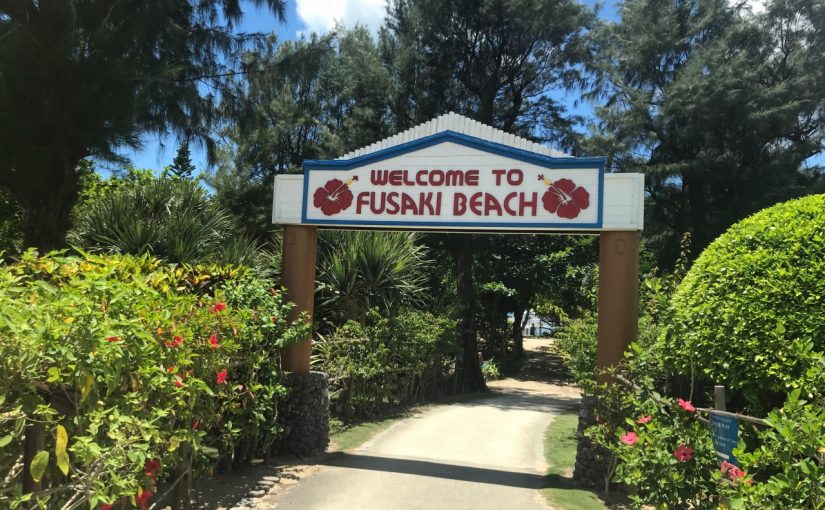
Fusaki Beach
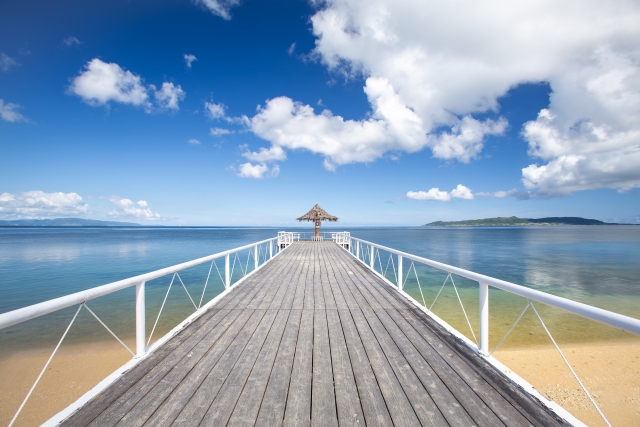
This beach is managed by Fusaki Resort Village, one of Ishigaki Island's most popular resort hotels.
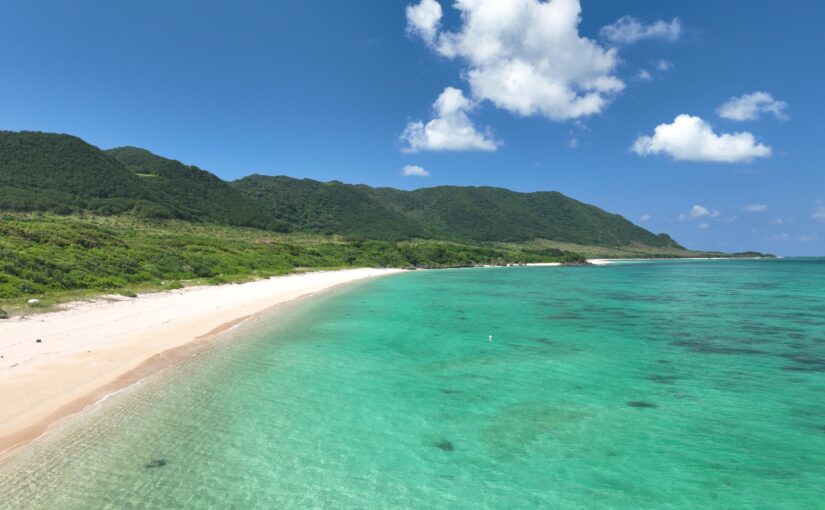
This natural long beach with its white sand and beautiful ocean is open to visitors even if they are not staying at the hotel.
The beach is so pristine and beautiful that sea turtles visit every year to lay their eggs.
Location: 1625 Shinkawa-Tomizaki, Ishigaki City, Okinawa, Japan
Access: Approximately 19 km from Shin-Ishigaki Airport, 35 minutes by car
Parking: Available (free of charge)
Meals (nearby): Available
Toilet: Yes























































![[Ishigaki Island / Approx. 2.5 hours] Same-day reservations accepted! SUP tour to the mystical “Blue Cave”★ A new experience in crystal-clear waters♪ Free photos](https://ishigaki-tours.com/wp-content/uploads/2017/12/DB89F99F-C338-4E76-BC19-CEC4FDDE95AC-1-825x510.jpeg)